
Home / Accelerating the decarbonization of the Chemical Industry
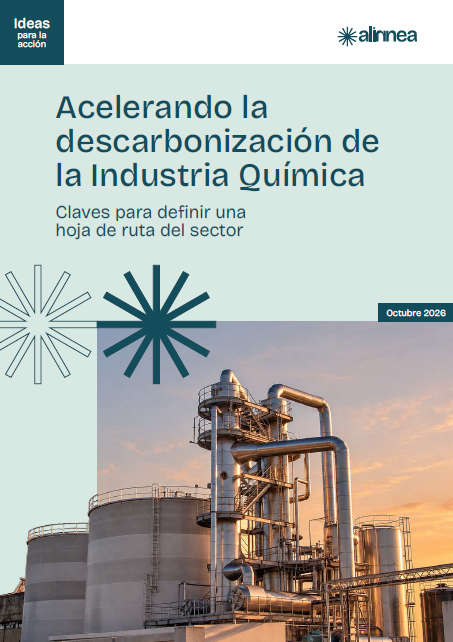
The report analyses the situation of the chemical industry in Spain, a strategic sector that supplies 98% of productive sectors, and the main obstacles shaping its transformation. It identifies ten bottlenecks related to energy costs and electrification, regulation, demand for low-carbon products, geopolitics and supply chains, measurement and traceability, competitiveness, governance, financing, technology deployment, and access to alternative feedstocks. The document examines how to overcome these barriers in order to reduce the sector’s emissions and environmental impacts without losing productive capacity, jobs or strategic autonomy.
Building on this diagnosis, the report sets out a roadmap with short-, medium- and long-term actions across four areas: enabling conditions; technologies and decarbonisation; demand and markets; and competitiveness and strategic autonomy. It develops three priority proposals: promoting Green Public Procurement as a demand-creation tool, strengthening the combined effectiveness of the EU ETS and CBAM to protect industrial transformation against carbon leakage, and reinforcing market surveillance and customs controls so that imported products meet the same obligations as those manufactured in the EU.
This report is part of the ‘Ideas for Action’ series and presents the conclusions of the working group led by alinnea, which between March and July 2026 brought together 50 professionals from 34 organisations from the public and private sectors, financial institutions, industry, trade unions and civil society.
The participation of these organisations does not necessarily imply their endorsement, in the form of specific commitments, of the ideas presented in the final document.
Lenght: 76 pages
Available languages: Spanish and English (upcoming)
The report identifies ten bottlenecks related to energy costs and electrification, regulation, demand for low-carbon products, geopolitics and supply chains, measurement and traceability, competitiveness, governance, financing, technology deployment, and access to alternative feedstocks. The document examines how to overcome these barriers in order to reduce the sector’s emissions and environmental impacts without losing productive capacity, jobs or strategic autonomy.