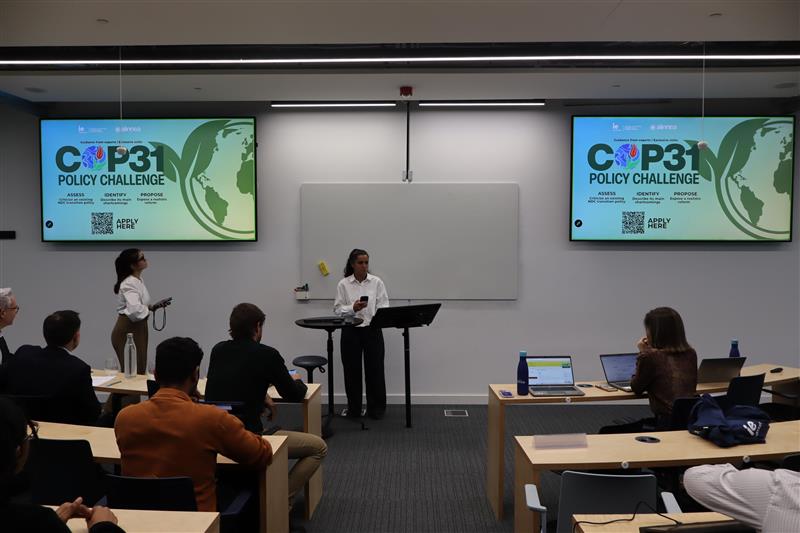
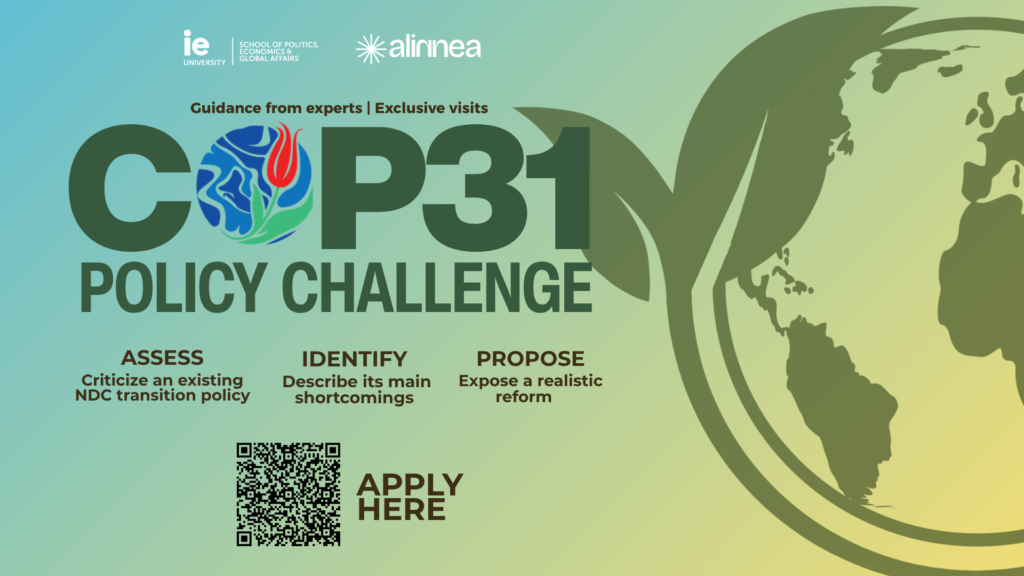
How can climate ambition be translated into concrete action? This is the question at the heart of the COP31 Policy Challenge 2026, a new initiative developed by alinnea and IE School of Politics, Economics & Global Affairs (SPEGA). The Challenge introduces students to the complexities of international negotiations and public policymaking, connecting classroom learning with real-world climate action.
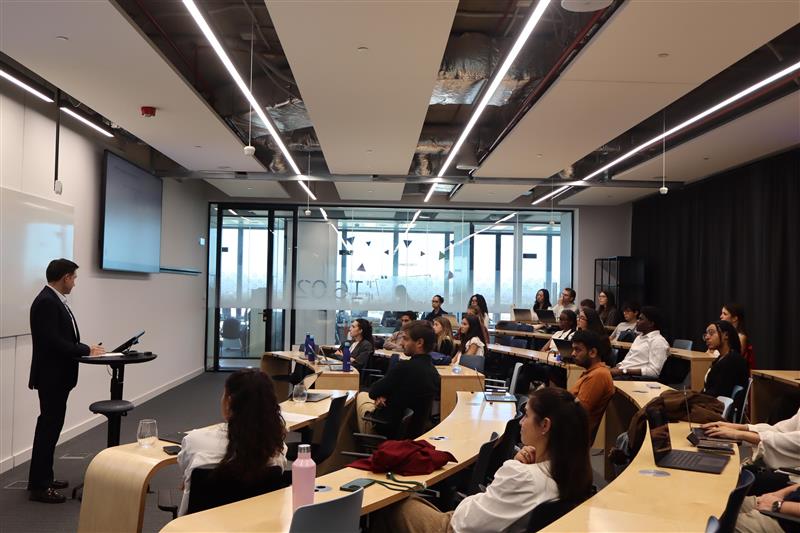
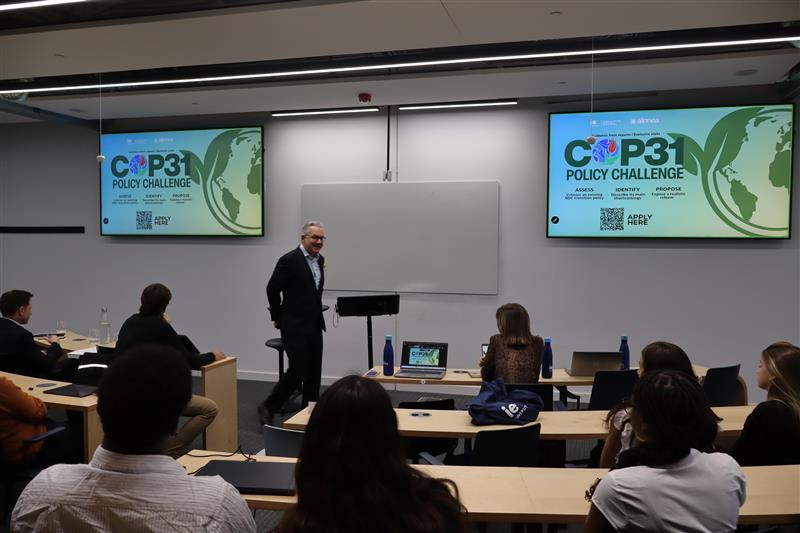
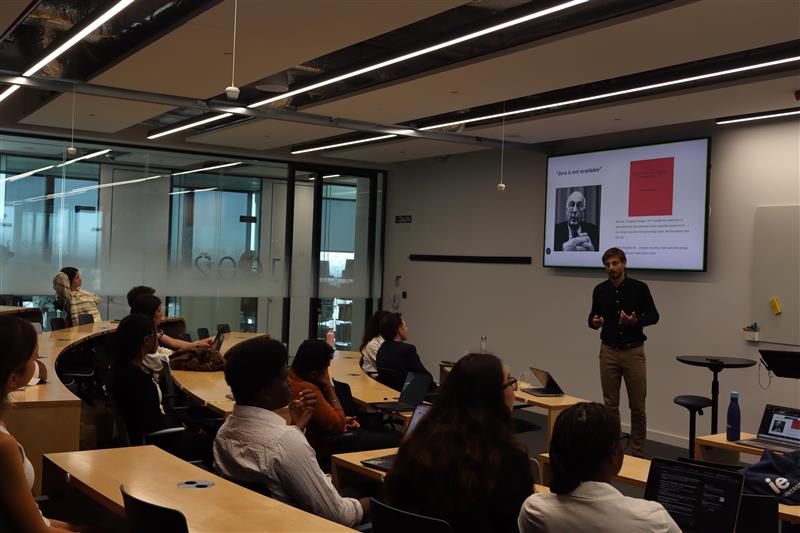
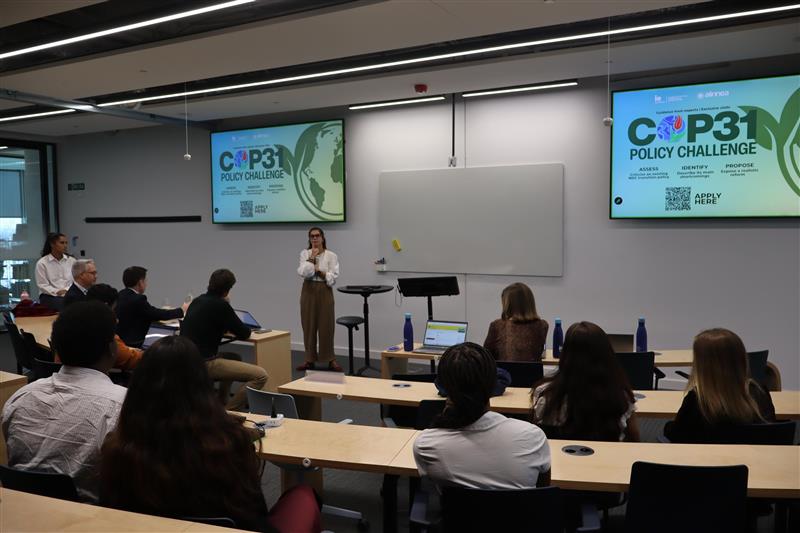
The Challenge began on 14 October with a kick-off session moderated by Sara Candela, bringing together experts in climate negotiations, energy, circular economy and energy efficiency. The event introduced students to the regulatory, technical and economic barriers they will need to consider when developing their proposals.
Vera Estefanía González, Senior Advisor at the Spanish Climate Change Office within the Ministry for the Ecological Transition and the Demographic Challenge, opened the expert discussions with a presentation on international climate negotiations. Her insights helped students explore the difficulties of reaching common agreements among countries with different national priorities and better understand the context of the Challenge.
The session also featured Miguel Ángel Muñoz Rodríguez, Head of Climate Policies and Alliances at Iberdrola; Geoffrey Lonca, Associate Director and Circular Economy Expert at IE University; and Agustín Villar Pazos, Director of Regulation and Training at ANESE. Their contributions introduced the Challenge’s three focus areas and highlighted some of the obstacles to implementing climate policies.
Working in teams of at least five, students will take on the role of policymakers. Each team will select a country—Spain, Morocco or Türkiye—and analyse its Nationally Determined Contribution (NDC), the document setting out its climate commitments. Based on this analysis, they will identify a policy gap or an area for improvement and develop a concrete, feasible policy recommendation.
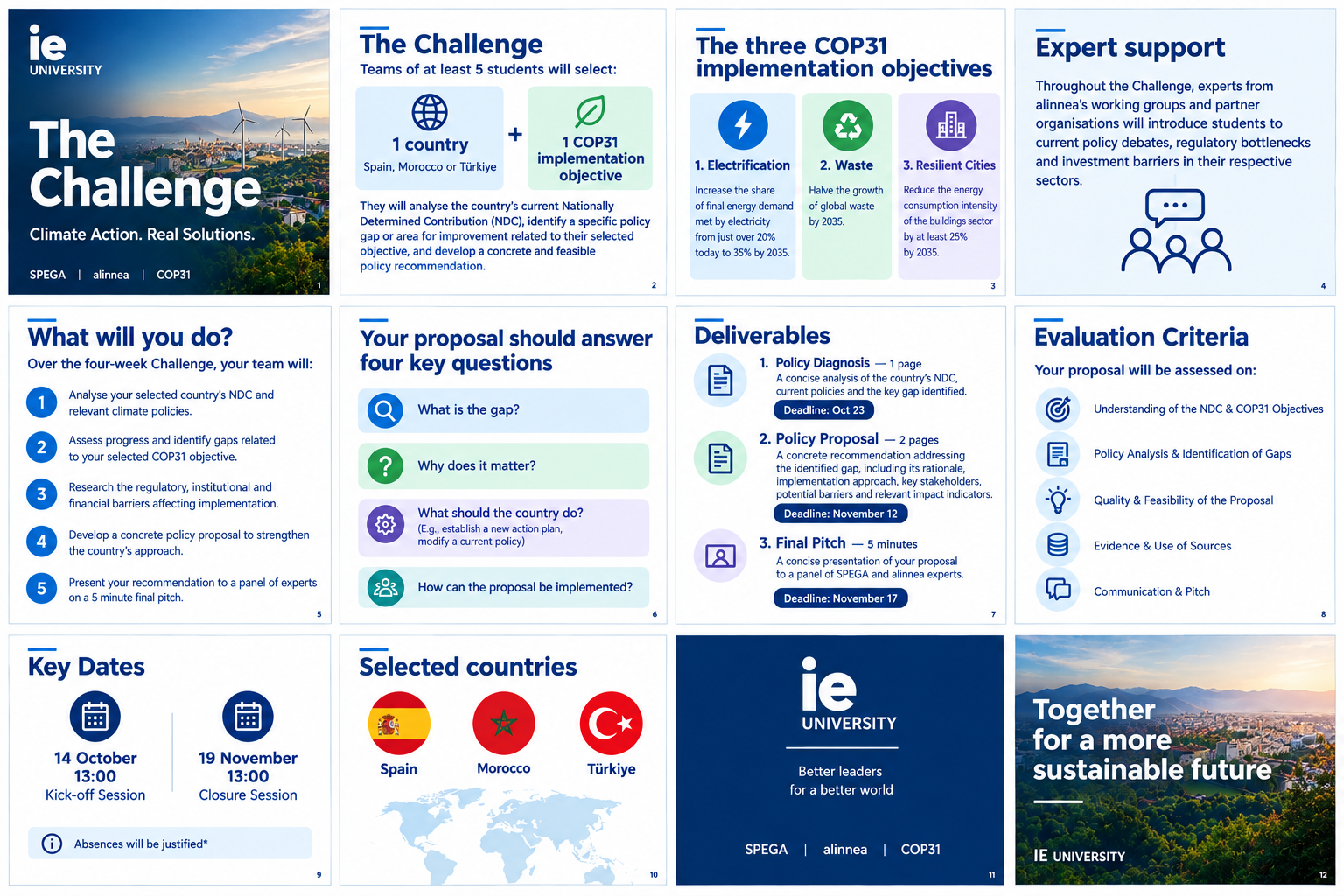
Teams will focus on one of the three objectives set out in the Challenge, all with a 2035 horizon:
Throughout the process, teams will receive support from experts in alinnea’s working groups and partner organisations. Their proposals must explain the gap they have identified, why it matters, what action the country should take and how it could be implemented, taking regulatory, institutional and financial barriers into account.
The Challenge will culminate in a policy diagnosis, a policy proposal and a five-minute presentation to a panel of SPEGA and alinnea experts. The closing session is scheduled for 19 November.
The initiative builds on the Green Industry Challenge held last year by alinnea and SPEGA, in which undergraduate students developed proposals to accelerate the green transition in Latin America. Teams addressed investment, regulatory and sustainability challenges in areas including renewable energy, the just transition, battery recycling and industrial decarbonisation. The winning project focused on green hydrogen in Brazil.
Through this new edition, alinnea and SPEGA continue to create opportunities for future professionals to analyse real-world problems, discuss their ideas with experts and develop evidence-based solutions. The collaboration connects knowledge, dialogue and practice to advance climate action.