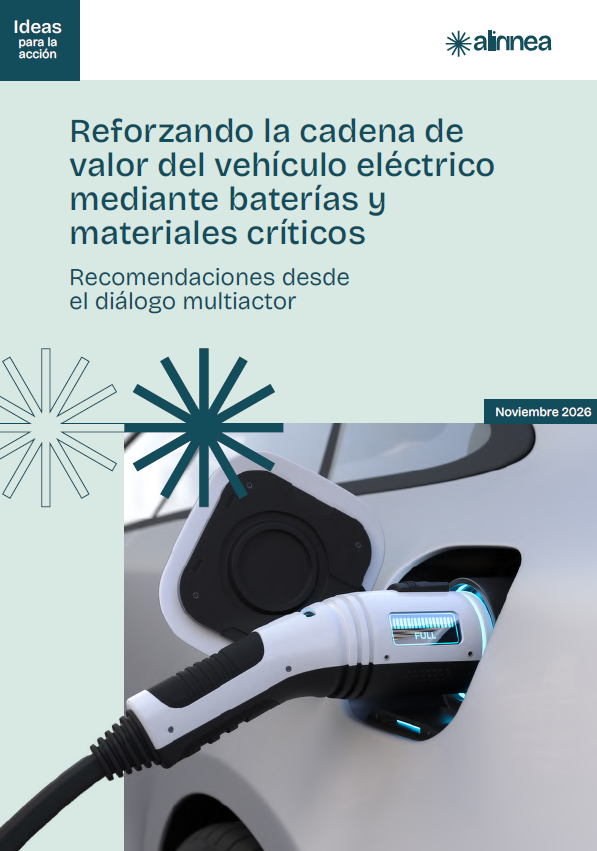
alinnea calls for a stronger battery value chain to drive decarbonisation and competitiveness in the electric vehicle sector
New report on batteries and critical materials presented
alinnea calls for a stronger battery value chain to drive decarbonisation and competitiveness in the electric vehicle sector
25/11/2026
Strengthening industrial, technological and workforce capabilities across the battery value chain is essential to decarbonising transport and consolidating Spain’s electric vehicle industry. This requires connecting raw material extraction and refining with the production of active materials, cells and batteries, as well as their reuse and recycling.
This is one of the main conclusions of alinnea’s report, “Strengthening the Electric Vehicle Value Chain through Batteries and Critical Materials”, presented on 24 November at the online event “Batteries and Raw Materials: Critical Resources for Electric Vehicle Decarbonisation”.
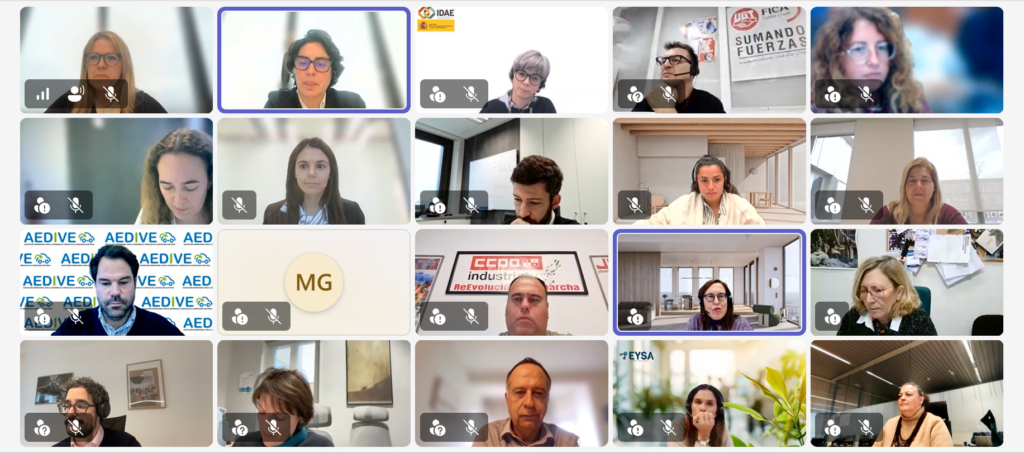
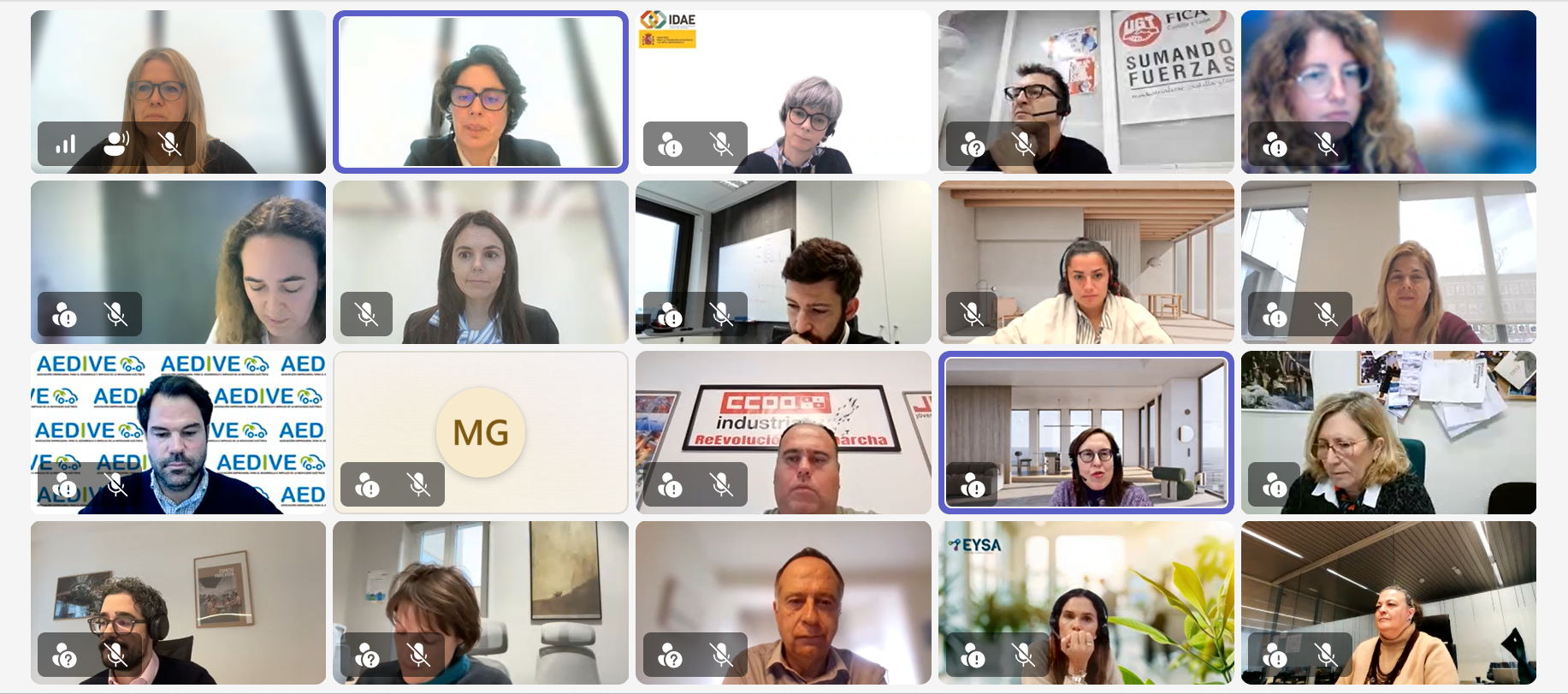
The report draws on a multi-stakeholder dialogue involving 31 professionals from 26 organisations, including public authorities, businesses, industry associations, research centres, trade unions and civil society organisations. Three thematic sessions and a validation session provided opportunities to review the analysis, identify barriers and develop proposals for action.
A value chain with capabilities still to develop
During the presentation, Ana Belén Sánchez, Director of alinnea, highlighted the need to turn Spain’s potential into productive capacity that helps reduce external dependencies and generate industrial value and employment.
The analysis identifies an incomplete value chain, with particularly significant gaps in refining and active material production. The international concentration of these activities, together with dependence on imported technologies, equipment and components, increases European industry’s vulnerability to supply disruptions.
The report identifies ten interconnected areas of barriers: industrial capabilities and value chain integration; critical raw materials and security of supply; energy and operating costs; regulation and administrative procedures; technology and industrial uncertainty; investment and financing; talent and skills; European competitiveness and strategic autonomy; demand and markets; and governance and coordination.
Key challenges include complex permitting procedures, financing insufficiently adapted to industrial investment cycles, energy costs and the gap between research results and their application at industrial scale.
Circularity is another priority. The report calls for stronger battery reuse, recycling and traceability, recognising that recovered materials will need to complement primary supply over the coming decades.
Three proposals for progress
Building on this analysis, alinnea highlighted three proposals for action:
1. Develop a national skills strategy for the battery value chain.
The proposal includes a skills observatory and a national programme to anticipate workforce needs and ensure people receive training in time. It combines dual vocational education and training, continuing training and reskilling, helping workers move into the sector from other industrial activities.
It also proposes strengthening public authorities’ capabilities in areas such as permitting, inspection and emergency response.
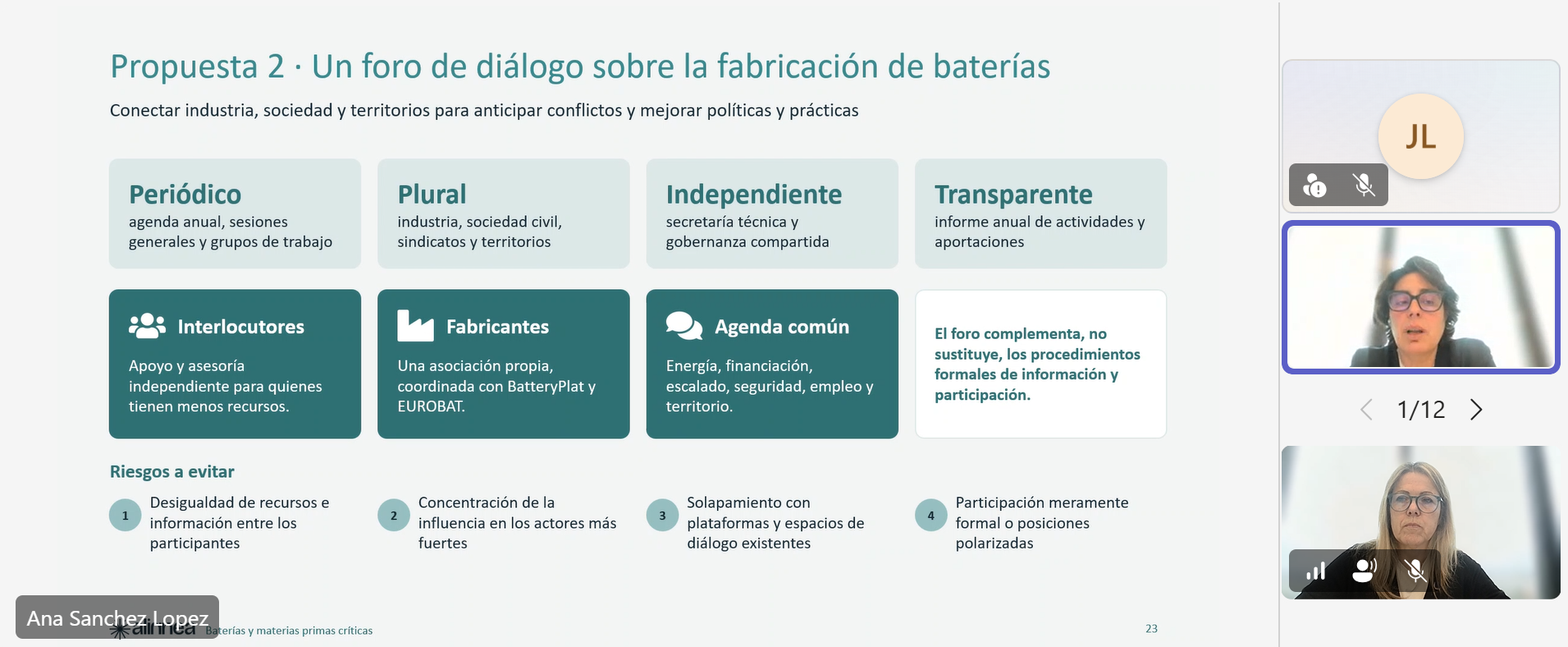
2. Establish a forum for dialogue between industry, society and local communities.
The aim is to connect the different stages of the value chain and support ongoing dialogue between businesses, public authorities, research and knowledge institutions, trade unions and civil society.
This forum would enable participants to address financing, technological development, training and local participation together, supported by accessible information and conditions that enable meaningful participation.
3. Strengthen the social licence to operate and shared value in mining.
The report proposes incorporating local assessments and participation from the earliest stages of projects, alongside clear information, participatory environmental monitoring and mechanisms for sharing benefits.
This approach includes planning for the transition after mine closure, linking project development to lasting opportunities for local communities.
A roadmap to unlock investment, scale up and build lasting local value
The recommendations are organised into four areas: enabling conditions; the value chain, technologies and decarbonisation; demand and markets; and competitiveness and strategic autonomy, with short-, medium- and long-term actions.
These include coordinating permitting procedures, improving regulatory predictability and adapting financing to projects’ investment and operating needs. The report also proposes supporting industrial scale-up, connecting innovation with production and developing recycling and material recovery capabilities.
On the market side, the report highlights the role of electric mobility and energy storage as drivers of demand. It also proposes diversifying supply and ensuring that foreign investment contributes to the development of local suppliers, knowledge and technological capabilities.
The presentation summarised this approach through three priorities: unlock investment, scale up and build lasting local value, connecting industrial development with innovation, skills and local communities.
Perspectives from geology, industry, research and employment
The presentation was followed by a round of reflections moderated by Patricia Pascau, Head of Communications at alinnea, which explored the barriers and proposals from different perspectives.
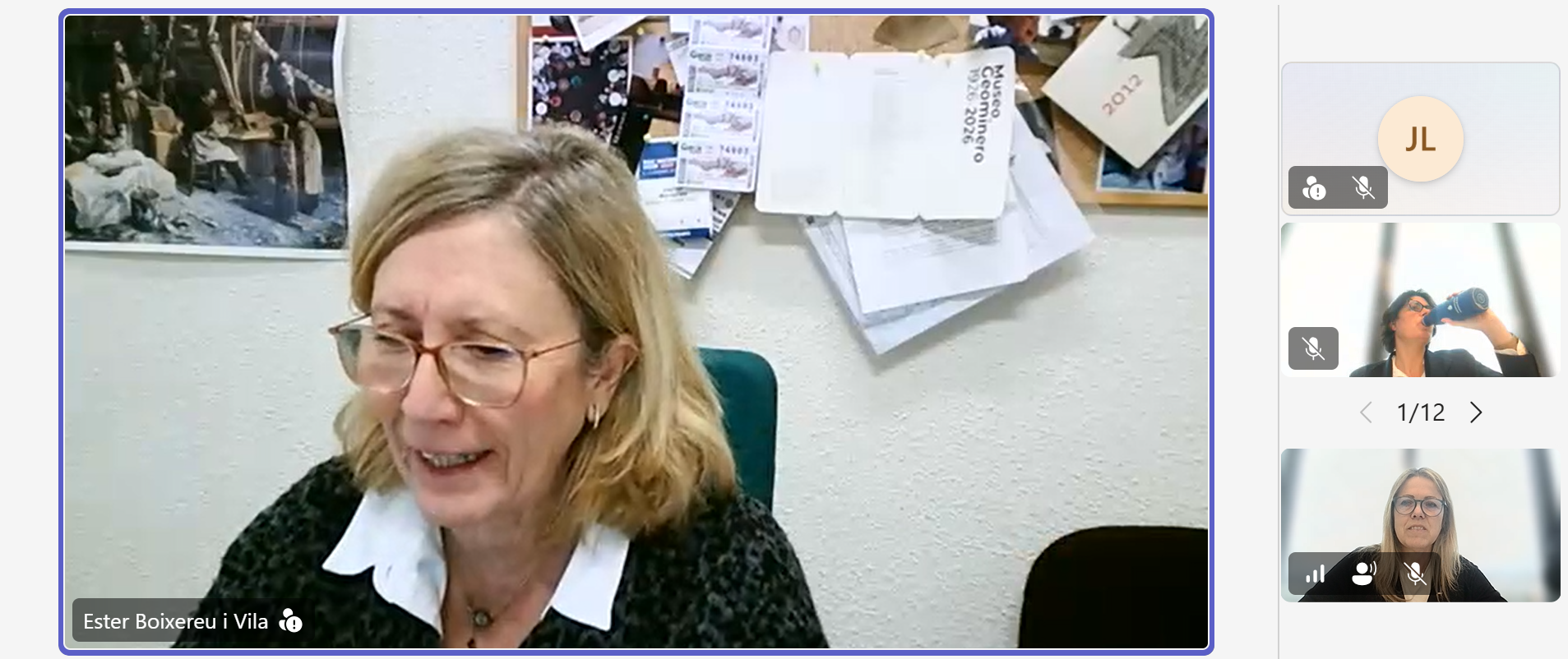
Ester Boixereu, Coordinator of the Economic Geology of Mineral Resources research group at the Geological and Mining Institute of Spain, highlighted Spain’s geological potential and the importance of continuing research into available resources. She stressed that developing new projects requires addressing both technical challenges and the time needed to ensure environmental protection and occupational safety.
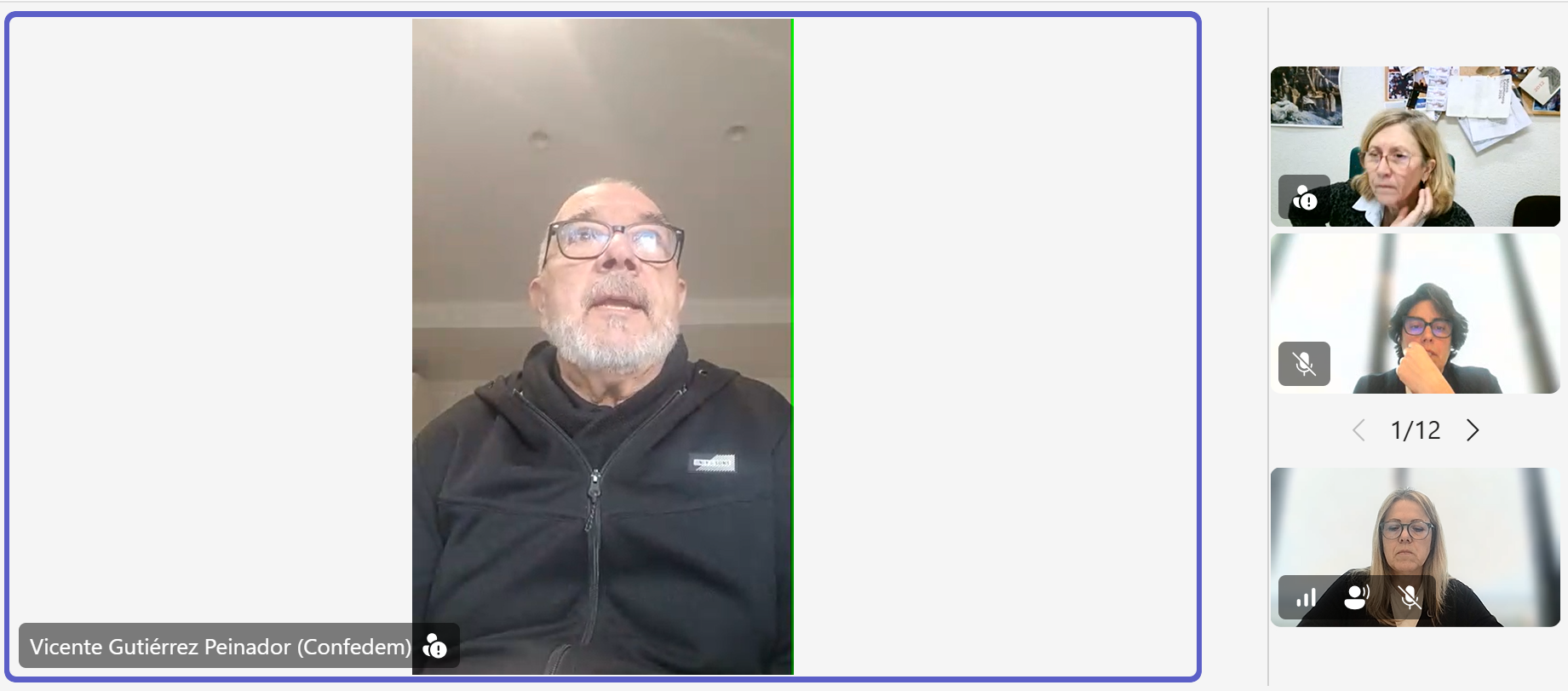
Vicente Gutiérrez, Secretary General of PRIMIGEA, outlined the difficulties in translating projects’ strategic designation into tangible progress on permitting and financing. He also warned of workforce shortages in extraction and processing activities and called for greater attention to training needs.
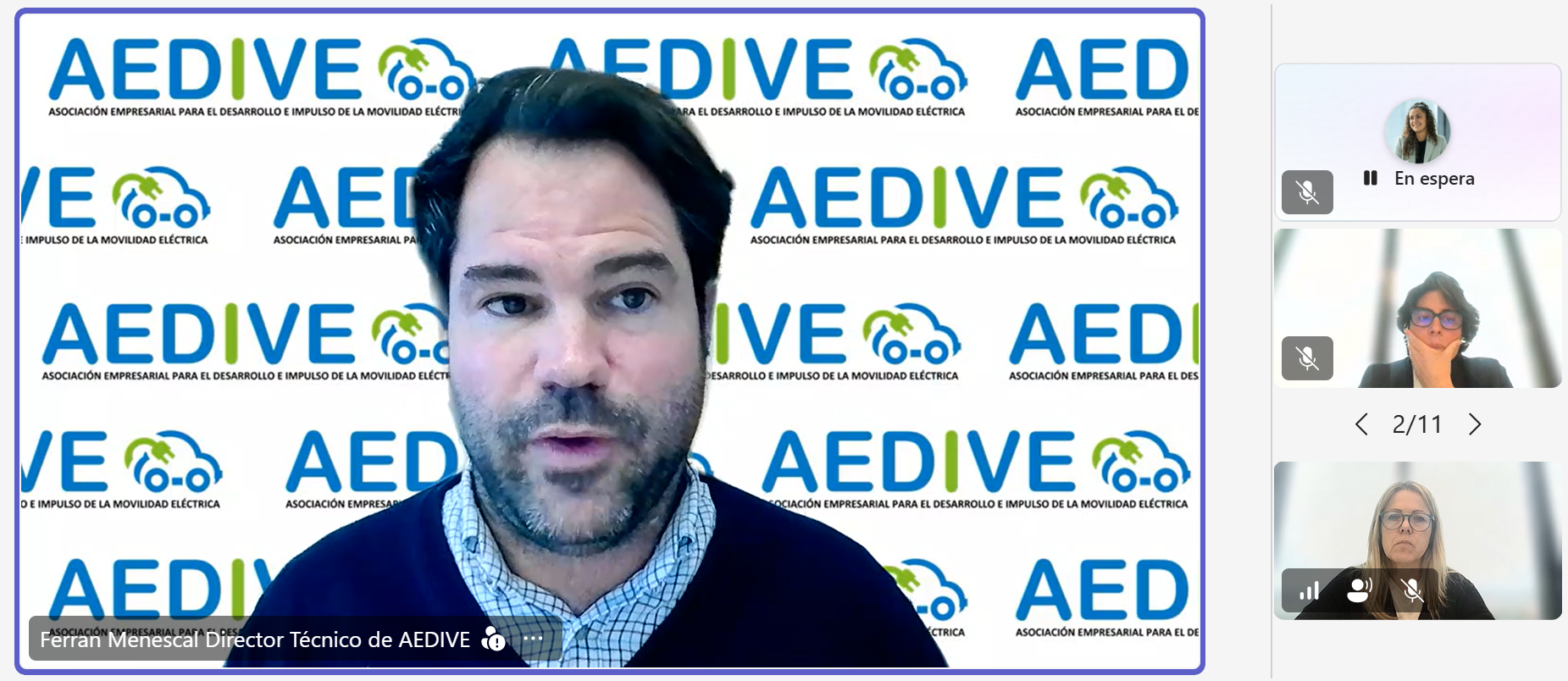
From the electric mobility perspective, Ferran Menescal, Technical Director of AEDIVE, advocated a European strategy based on added value, regulatory stability and coordinated industrial policies. He stressed that incoming investment must be accompanied by technology transfer, collaboration with universities and research centres, and the integration of domestic suppliers.
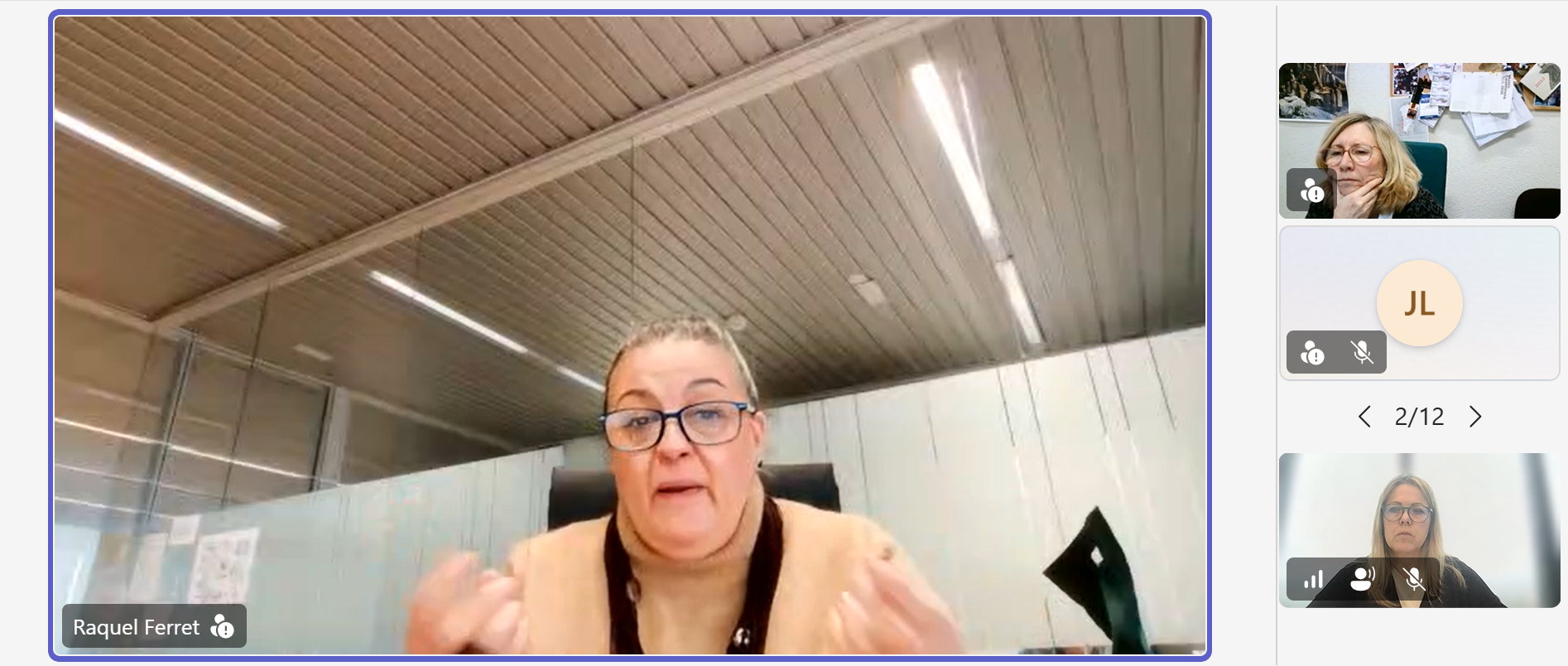
Raquel Ferret, Business Development Director at CIC energiGUNE, focused on the need to translate scientific and technological capabilities into industrial production. To help bridge this gap, she proposed exploring shared testing and scale-up infrastructure that could turn laboratory advances into active materials that can be produced consistently and made available to cell manufacturers.
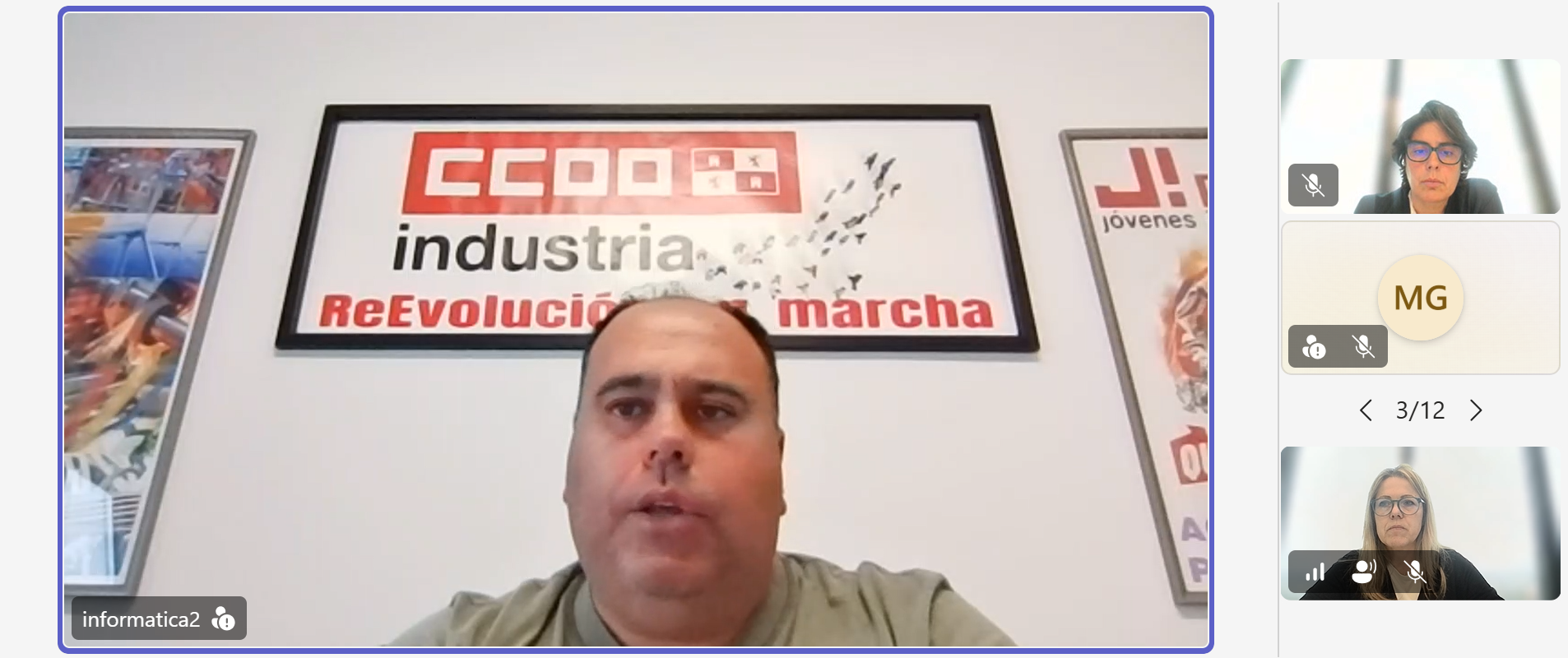
For his part, Rubén González, Head of the Automotive Sector at CCOO de Industria, highlighted batteries’ potential to create new industrial and employment opportunities. He called for early planning to reskill workers and for the sector’s development to be supported by a dedicated occupational health and safety strategy, social dialogue and quality jobs.
From analysis to action
The subsequent open discussion explored how to ensure that new investment generates knowledge, innovation and business activity across Spain’s industrial base. It also addressed the importance of maintaining regulatory certainty and clearly explaining the links between electric mobility, decarbonisation and energy autonomy.
In closing, alinnea reaffirmed its commitment to continuing the multi-stakeholder dialogue to advance training, financing, industrial integration and local participation. The aim is to ensure that the development of batteries and critical materials contributes to a climate transition that strengthens Spain’s competitiveness, employment and industrial capabilities.
Photo Gallery
Read the report
“Strengthening the Electric Vehicle Value Chain through Batteries and Critical Materials” forms part of alinnea’s “Ideas for Action” series. The report brings together an assessment of the sector, its main barriers and a roadmap for developing a competitive, sustainable and resilient value chain.
The document presents the conclusions of the working group convened by alinnea, which brought together more than 30 professionals from 26 organisations representing public authorities, businesses, industry associations, research centres, trade unions and civil society organisations between April and July 2025.
You can also view the presentation summarising the report (in Spanish)