Home / alinnea calls for faster energy storage deployment to drive decarbonisation
Energy storage is one of the key elements in accelerating Spain’s energy transition. Its deployment would enable better use of renewable generation, provide flexibility to the electricity system and facilitate the electrification of the economy. But to turn that potential into actual projects, the sector is calling for a regulatory, tax and financial framework better suited to the characteristics of this technology.
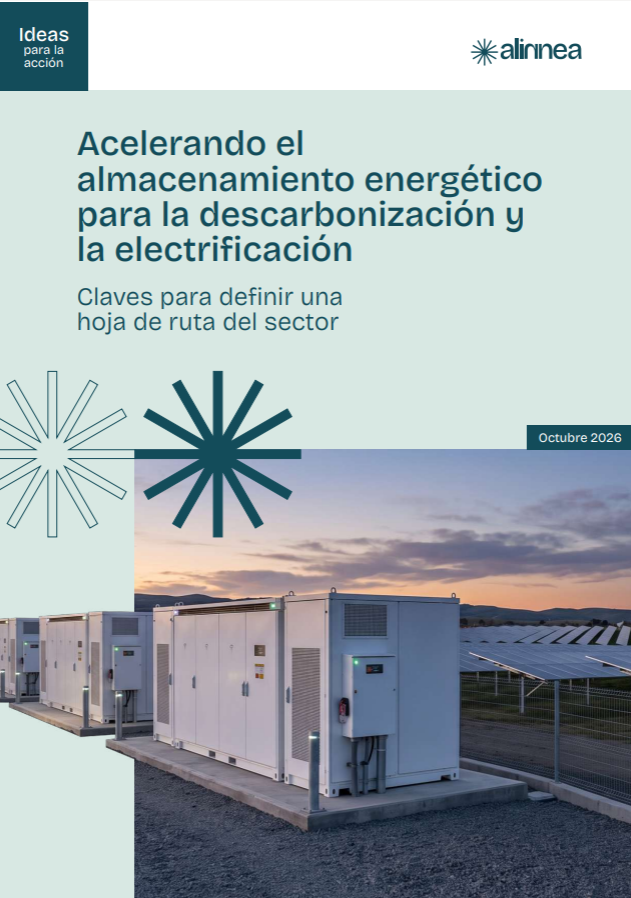
This is the main conclusion of alinnea’s new report, “Accelerating Energy Storage for Decarbonisation and Electrification: Key Elements for a Sector Roadmap”, presented today at the event “Advancing the Energy Transition: The Strategic Role of Storage and Flexibility”.
The report argues that energy storage allows renewable electricity generated at a particular time to be used later, while also helping to reduce curtailment, optimise grid use and strengthen security of supply. It also paves the way for greater substitution of fossil fuels with electricity in sectors such as industry.
The report identifies ten interconnected barriers currently slowing the development of energy storage in Spain. These include constraints on grid access and connection, regulatory fragmentation, the lack of full recognition of the services this technology provides to the system, and uncertainty over the revenues projects can generate.
These factors are compounded by industrial and social challenges, including reliance on imported technologies and components, the need for skilled professionals, and concerns around safety and local acceptance of these facilities.
Building on this assessment, alinnea proposes three priority measures to accelerate the deployment of energy storage:
1. Adapt taxation to the characteristics of energy storage.
The study calls for recognition that this technology consumes energy, returns it to the system and provides services essential to its operation. It therefore proposes a coordinated review of the taxes affecting storage, avoiding overlaps and distortions, and introducing stable incentives for investments that support flexibility and decarbonisation.
2. Introduce a capacity mechanism that facilitates financing.
The proposal aims to provide projects with more stable revenues linked to their availability when the system needs them. The report calls for distinguishing between the ability to meet demand, response speed and supply duration, while allowing revenues from different services to be combined and facilitating participation by demand-side and aggregated resources.
3. Establish a dedicated framework for long-duration energy storage.
alinnea proposes a definition based on the performance each facility can guarantee, regardless of the technology used. The document takes eight hours of discharge as an initial benchmark, subject to review as system needs evolve, and calls for this capability to be verified throughout the contract term. The aim is to steer planning, financing and innovation towards solutions capable of meeting long-duration storage needs.
Speaking at the report’s launch, Ana Belén Sánchez, Director of alinnea, stressed that “accelerating energy storage is essential to harnessing our renewable energy potential and advancing the electrification and decarbonisation of the economy. This report brings together the knowledge and experience of those who must make deployment possible and proposes a roadmap for overcoming the barriers holding it back. We want it to serve as a starting point for working with public authorities and the sector on concrete measures to accelerate storage deployment and its contribution to decarbonisation.”
The report organises its recommendations into a three-phase roadmap: removing the most immediate barriers over the next two years; scaling up the sector between years two and four; and fully integrating storage into system planning and operation over the longer term.
The document also includes measures to strengthen Spanish and European industrial capabilities, foster innovation and align training with the needs of a growing sector.
At the local level, it recommends improving public information, encouraging participation from the earliest stages of projects and establishing mechanisms to share benefits with local communities, supporting more balanced deployment and greater social acceptance.
The report is the result of a working group that brought together 52 professionals from 40 organisations representing the public and private sectors, financial institutions, industry, trade unions and civil society. Its conclusions draw on four sessions held between April and July 2026, which brought together business, regulatory, technological, financial and social perspectives.
The diversity of participants has provided a broad view of the challenges facing energy storage and the conditions needed to accelerate its development. In addition, 15 of the organisations belong to groups headquartered outside Spain, adding an international perspective to the analysis.
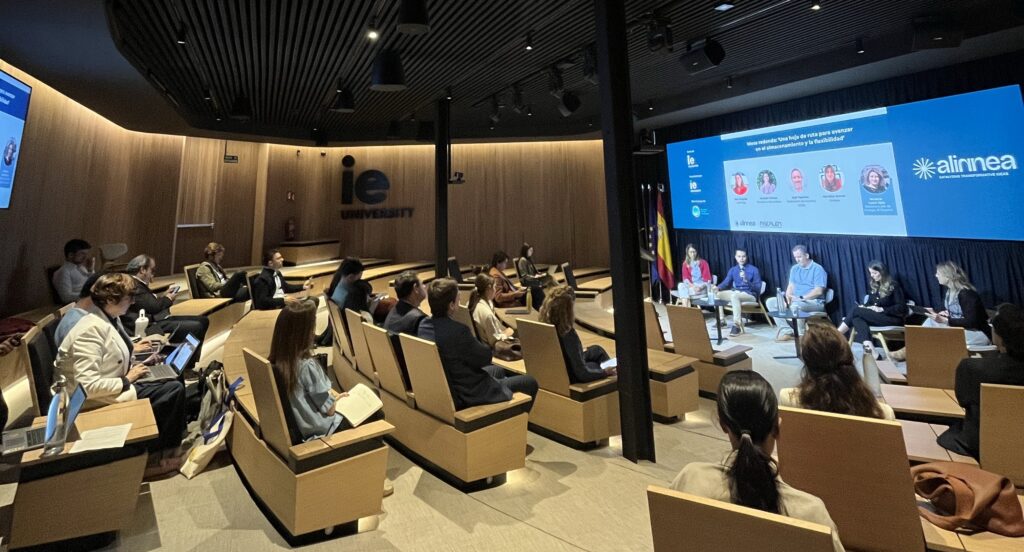
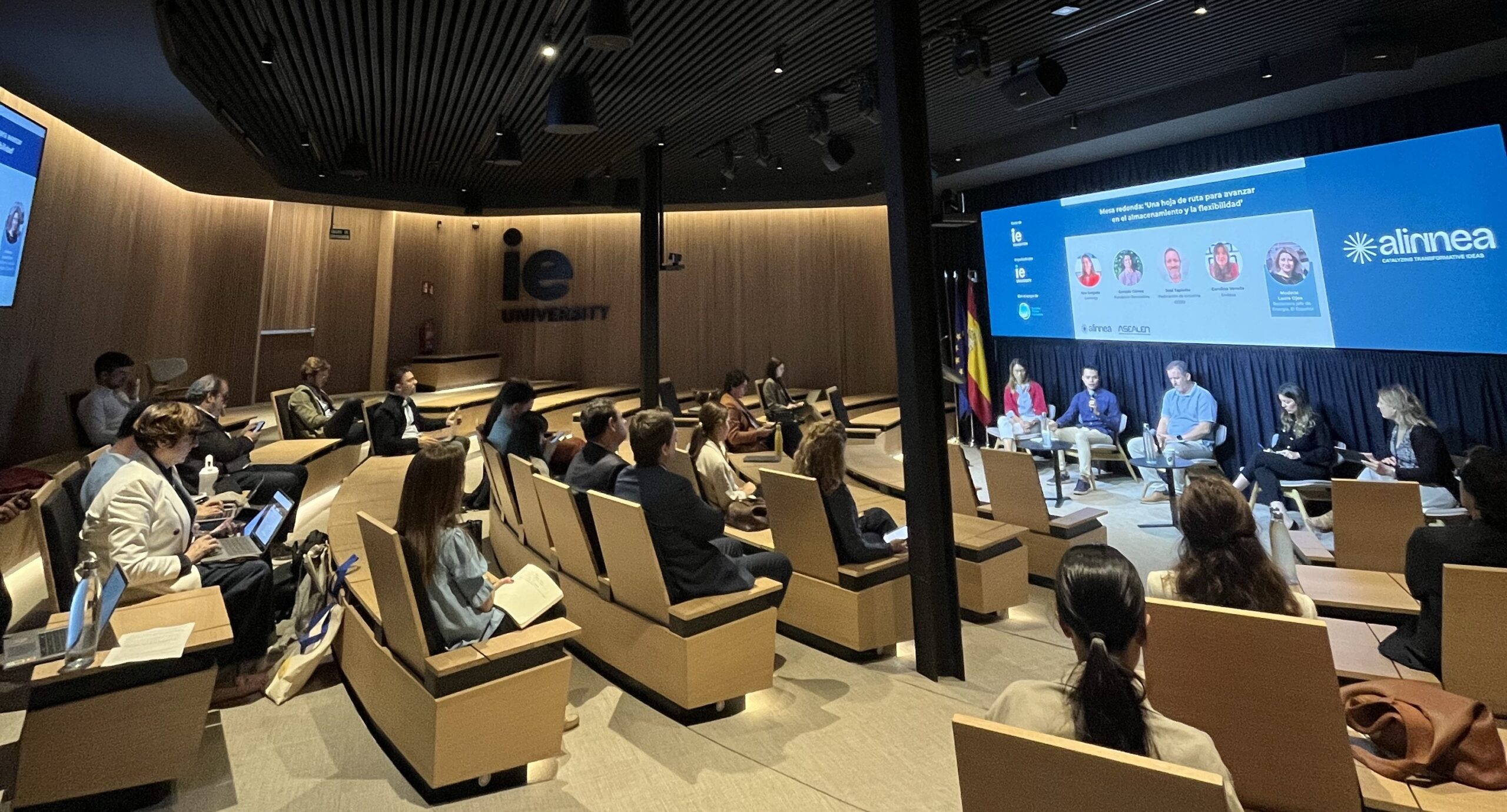
The report’s launch event, held in the Aula Magna at IE University, brought together representatives from the energy sector, finance and civil society to discuss the role of storage and flexibility in the energy transition.
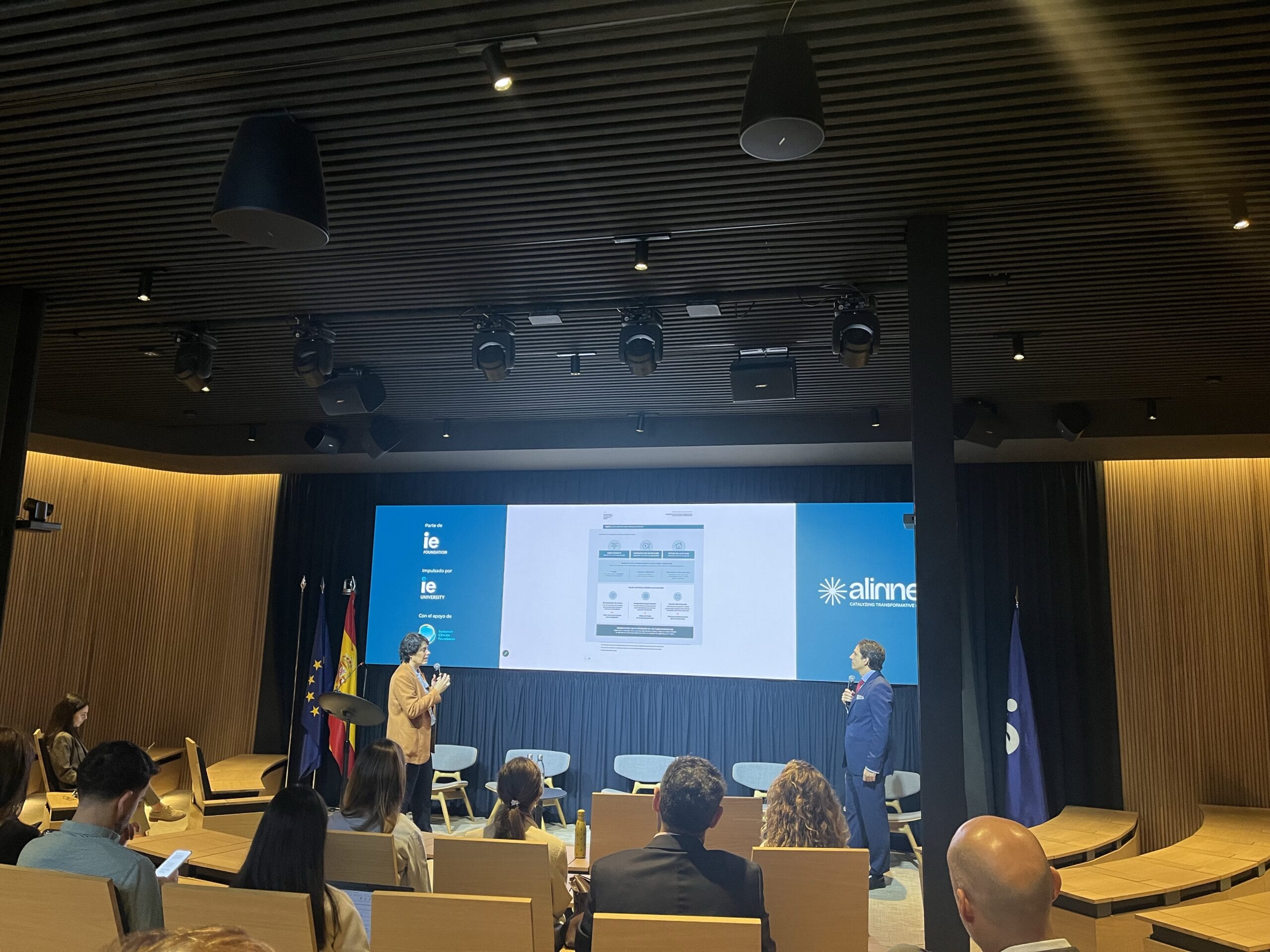
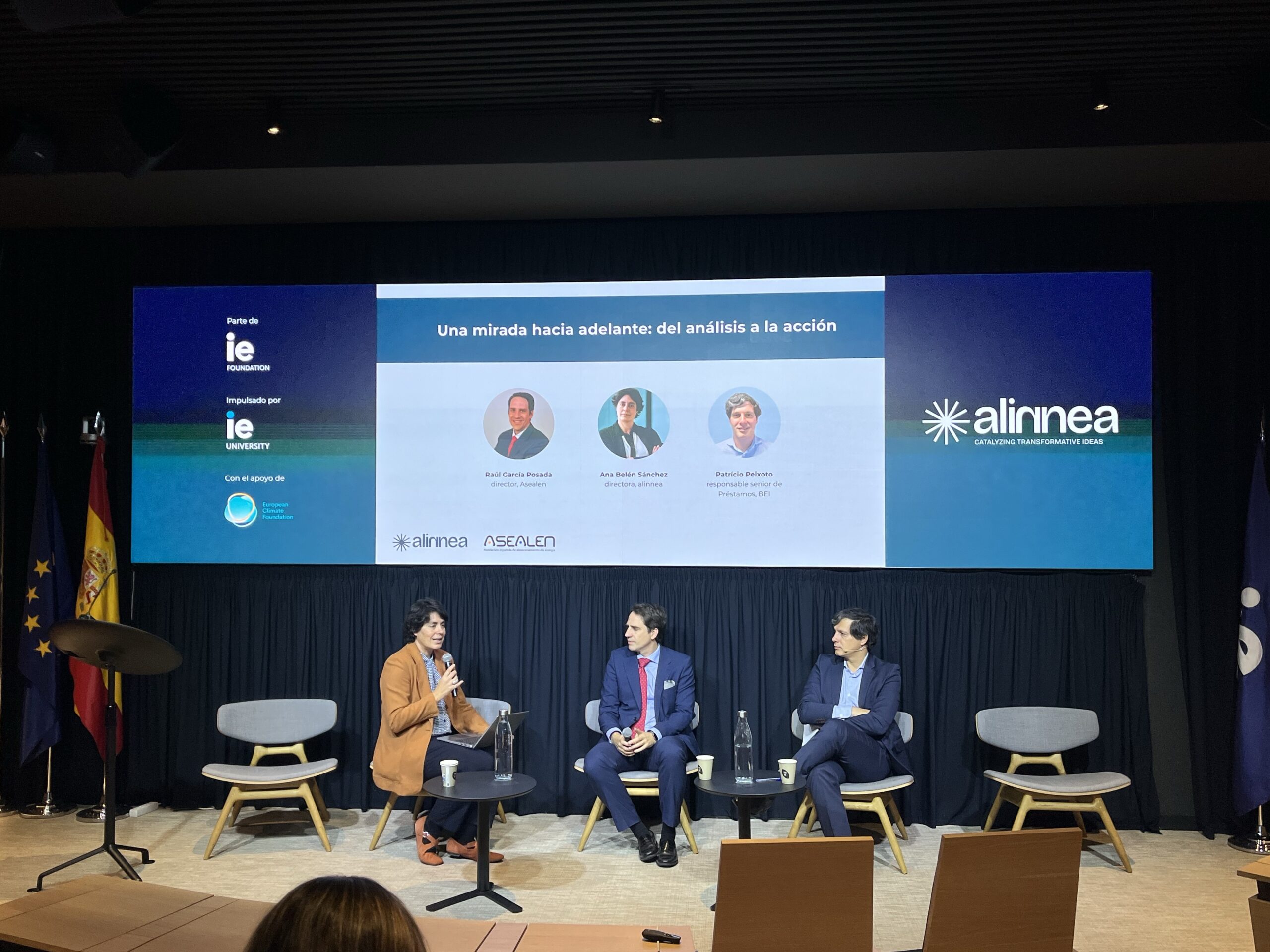
The event opened with remarks from Ana Belén Sánchez, Director of alinnea, and Raúl García Posada, Director of ASEALEN.
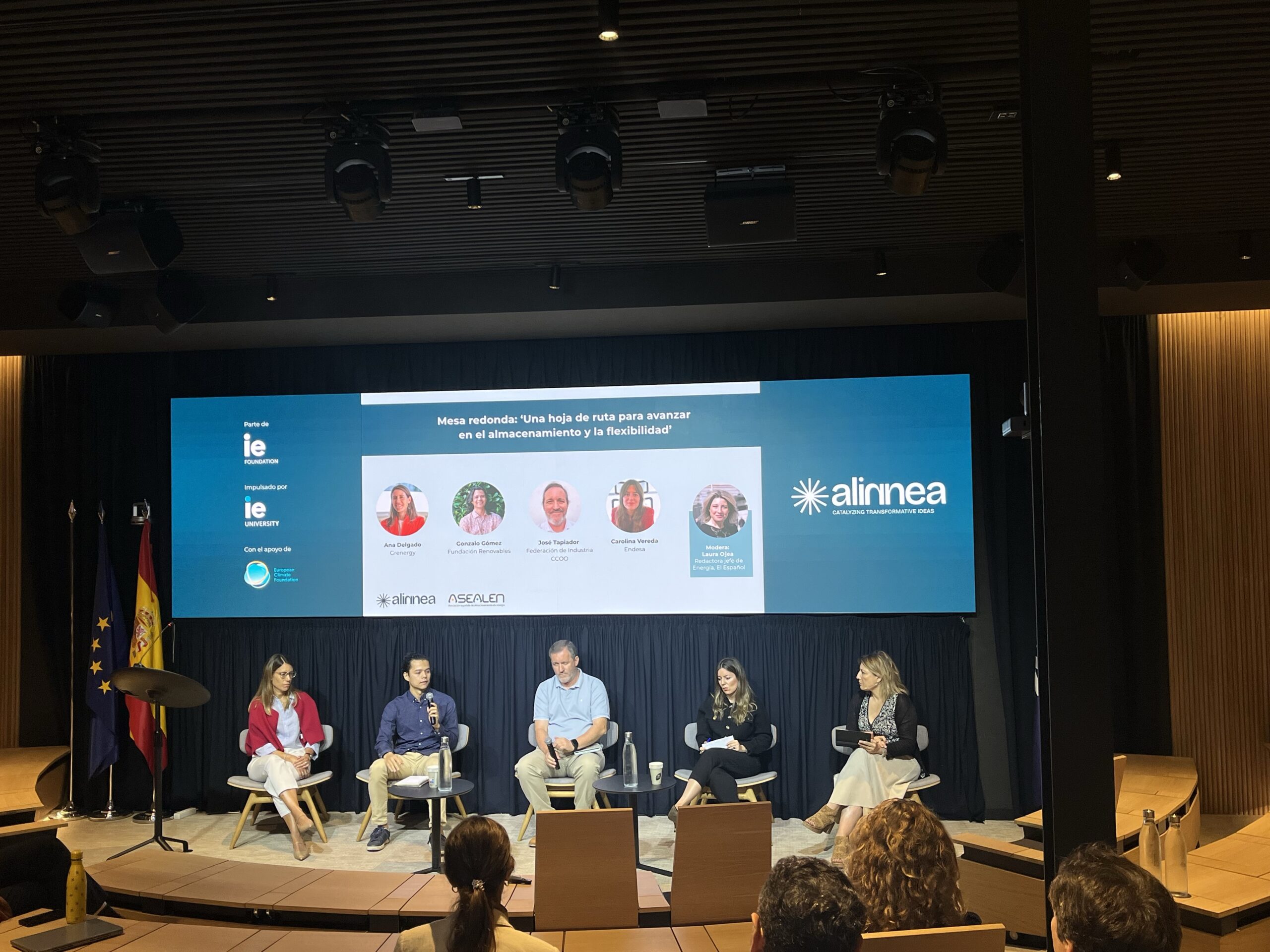
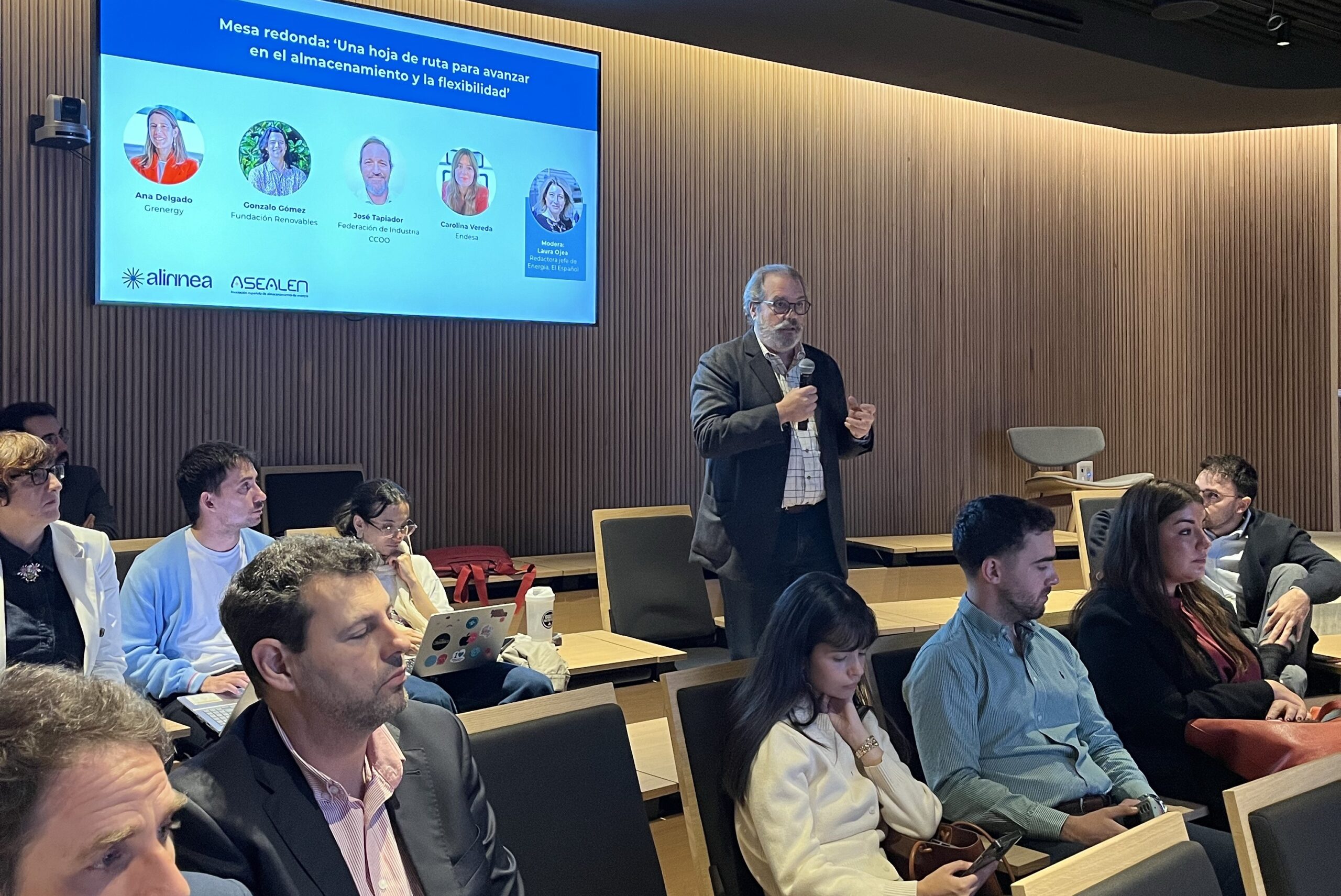
This was followed by an expert panel featuring Ana Delgado of Grenergy; Gonzalo Gómez of Fundación Renovables; José Tapiador of CCOO Industria; and Carolina Vereda of Endesa. The discussion was moderated by energy journalist Laura Ojea.
The panellists discussed the main barriers and priority actions needed to advance energy storage in Spain. They agreed that significant progress had been made in regulation and permitting, but that major bottlenecks remain. Grid access continues to be the critical issue, with 66 transmission grid nodes blocked and 1,700 MW blocked at distribution level.
A second discussion followed between Ana Belén Sánchez (alinnea), Raúl García Posada (ASEALEN) and Patrício Peixoto (European Investment Bank). They emphasised that energy storage is already a reality, with immediate opportunities in pairing solar PV farms with storage and developing pumped storage. The EIB is financing pioneering pumped storage projects on a non-recourse basis, with repayment relying solely on project revenues, paving the way for further projects.
Participants argued that solar PV projects now need storage to remain viable in the face of grid curtailment and price volatility. They stressed that industrial decarbonisation will depend on integrating storage with renewable generation, facilitating power purchase agreements (PPAs) between electricity producers and industrial users.
The discussion also highlighted the potential of industrial energy communities and the need to ensure quality jobs, specialised training and local consensus to secure community support for projects.
The discussion highlighted the importance of freeing up grid capacity, encouraging strategic siting—particularly pumped storage near reservoirs and batteries in areas with substantial solar PV generation—and developing flexible connection arrangements.
Other priorities included the capacity market, demand-side flexibility, cybersecurity, strategic autonomy in batteries and local acceptance of projects. Participants also stressed the need for skilled jobs, local
The report analyses the state of the sector in Spain and the main obstacles limiting its deployment. It identifies ten bottlenecks related to grid access, regulation, market design, financing, industrial and workforce capabilities, and the integration of projects into local areas. The document examines how to overcome these barriers to make better use of renewable generation, provide flexibility to the electricity system and facilitate the electrification of the economy.
This report is part of the ‘Ideas for Action’ series and presents the conclusions of the working group convened by alinnea, which brought together 52 professionals from 40 organisations between April and July 2025, representing the public and private sectors, financial institutions, industry, trade unions and civil society.