Home / The Greenland Crisis: How Climate Change Is Redefining Arctic Geopolitics
Climate change is not only transforming ecosystems; it is reshaping power dynamics, trade routes, and strategic priorities. Rising tensions around the Arctic offer a clear example of the consequences of a climate transition advancing faster than our ability to govern it.
At alinnea, as a think tank focused on climate change and its implications, we work to connect climate, economics, and geopolitics, and to bring this interrelationship into the public debate. In this context, understanding the strategic implications of Arctic ice melt is essential to anticipating the risks — and responsibilities — emerging in this new global phase.
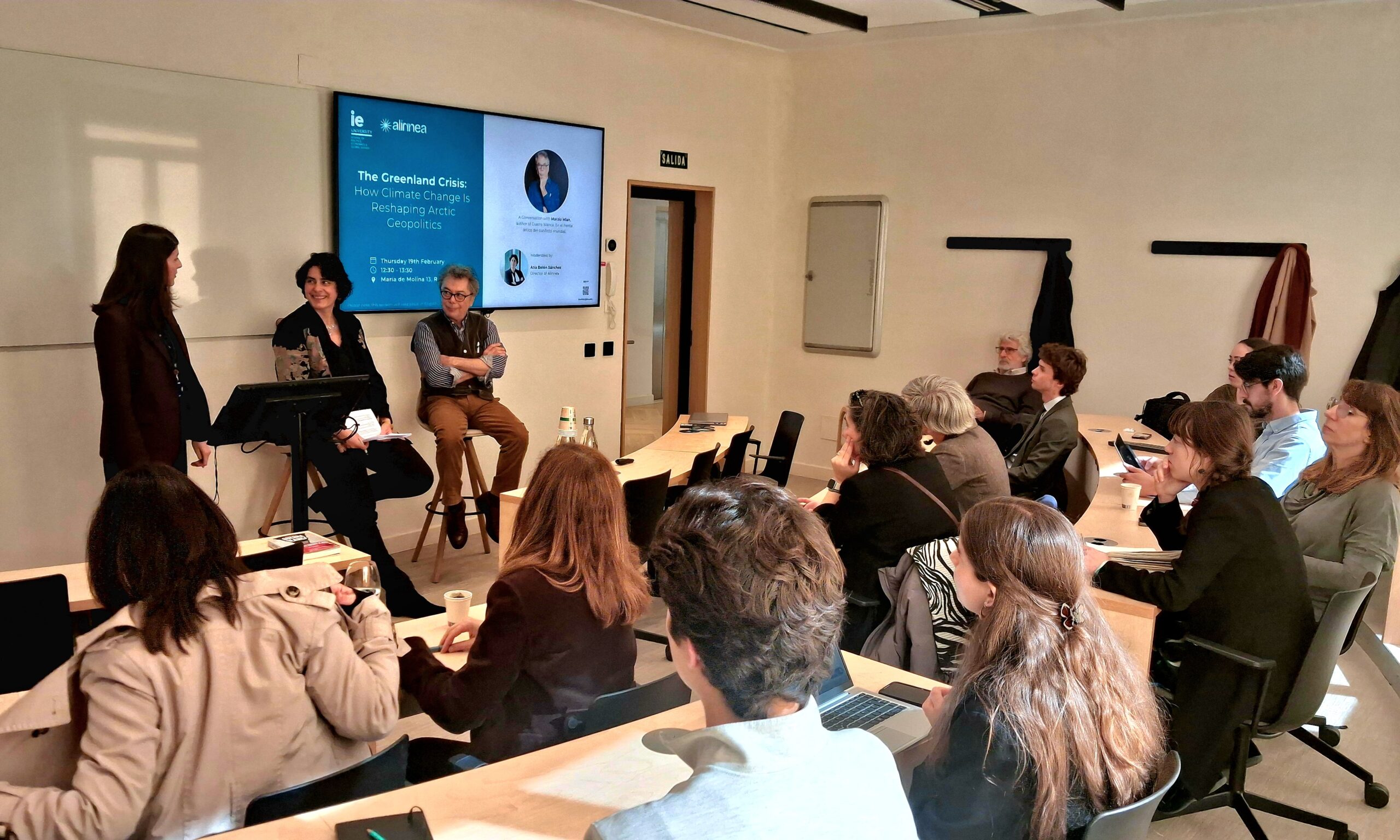
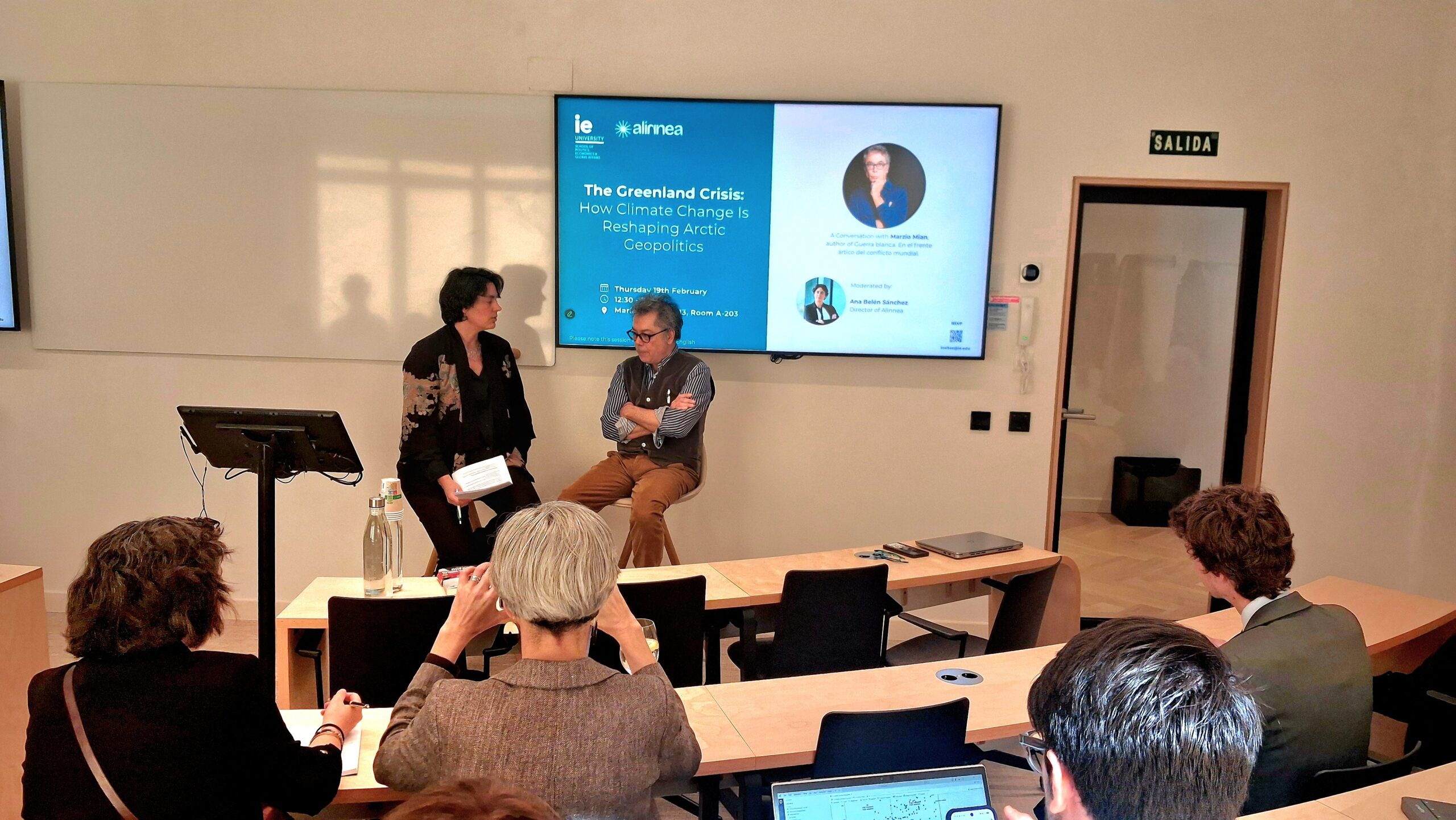
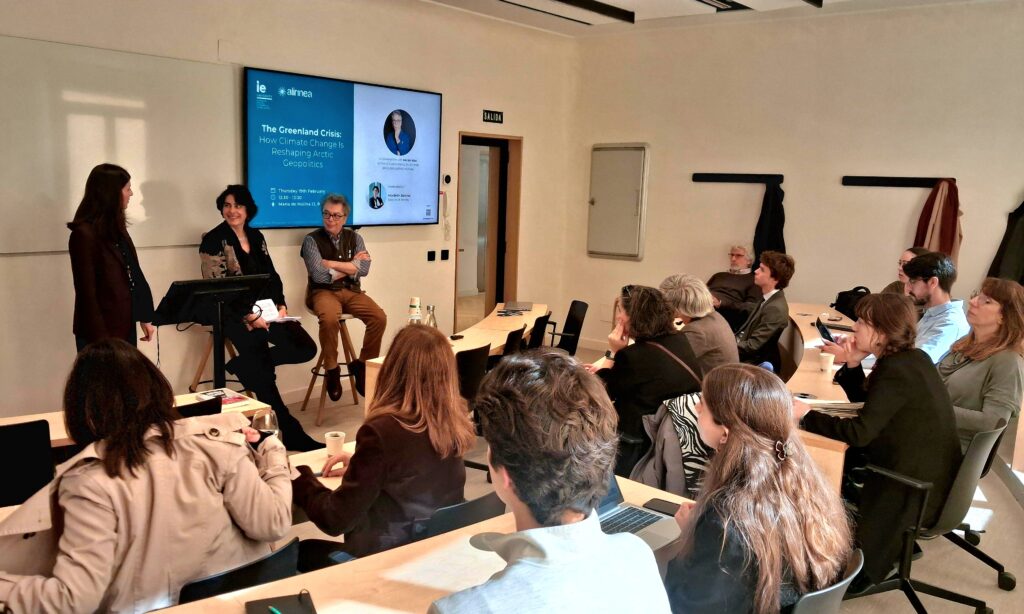
For this reason, alinnea hosted a dialogue between Ana Belén Sánchez, Director of alinnea, and journalist and writer Marzio G. Mian, an award-winning correspondent with more than 15 years of field research on how climate change is shaping the Arctic’s geopolitical relevance. He has recently published White War: On the Arctic Front of the Global Conflict.
The conversation revolved around a powerful idea expressed by Mian in conclusion: “What happens in the Arctic does not stay in the Arctic.” While this was once true in strictly scientific terms, it can now be extended to every domain.
The discussion made clear that the accelerated melting of the Arctic is not only an unequivocal sign of the climate crisis, but also a profound shift in the global geopolitical balance. What for decades was a frozen natural frontier is becoming a new strategic arena, marked by growing tensions among major powers.
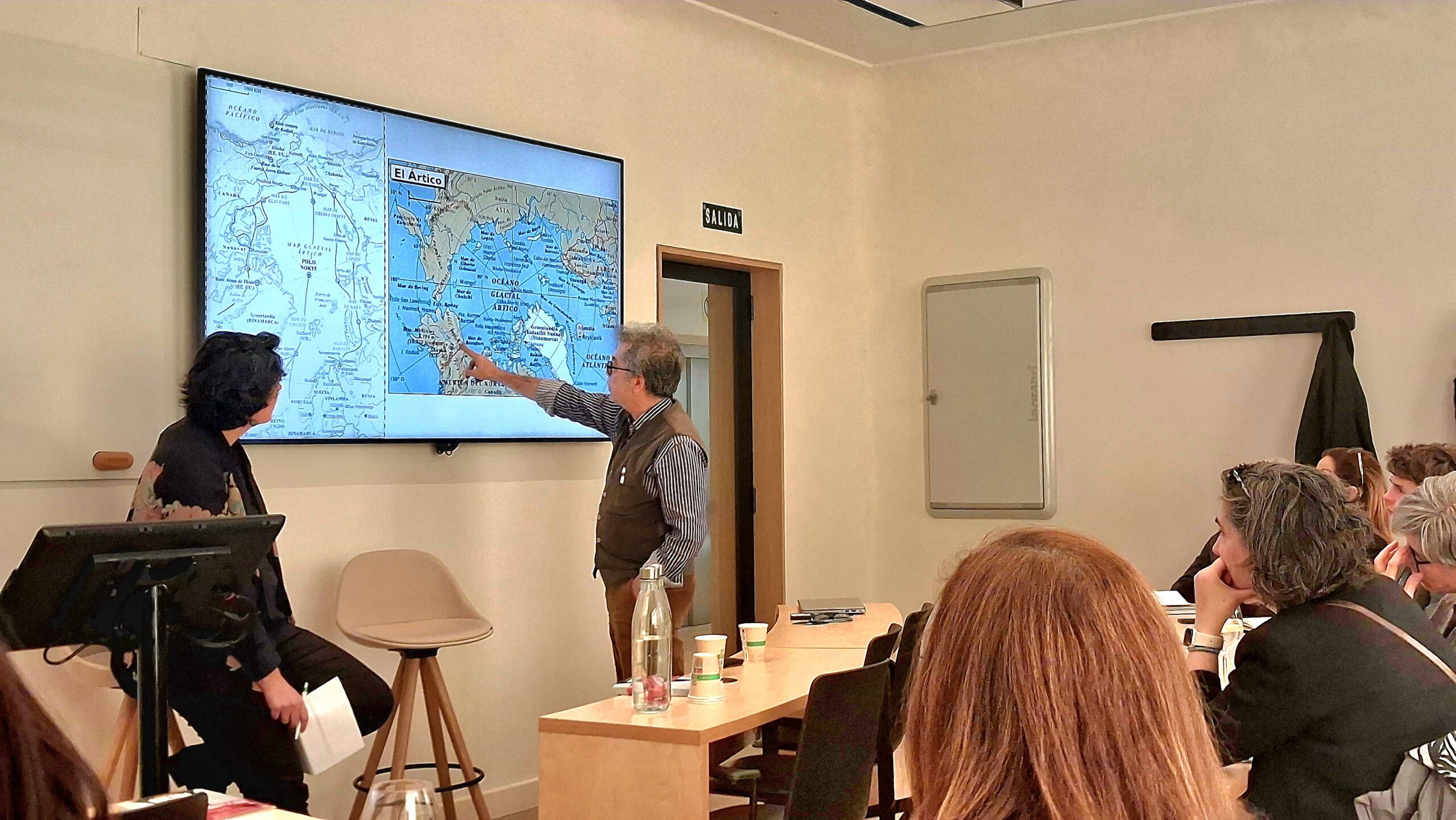
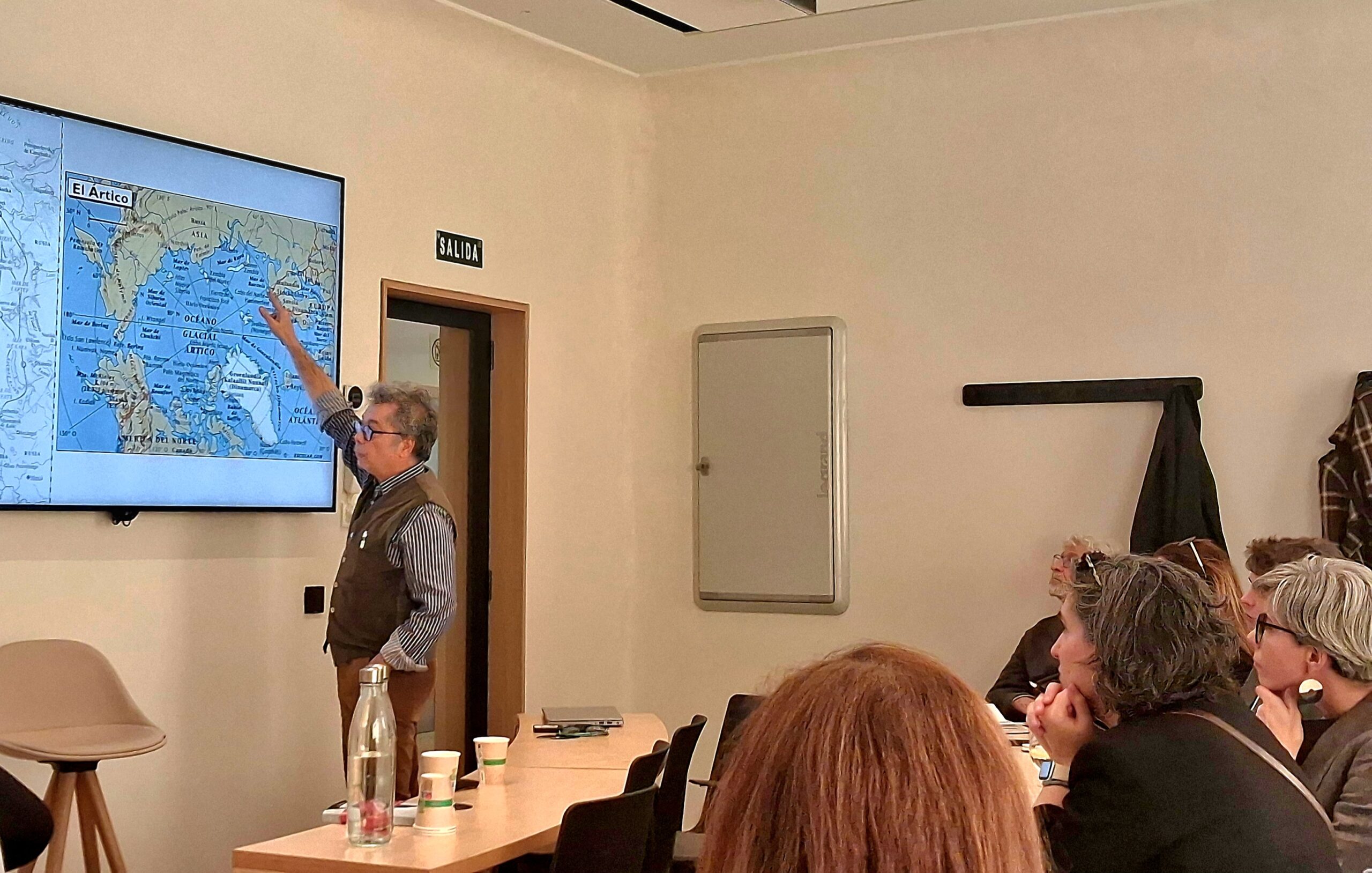
Marzio Mian began by outlining the main actors in the Arctic — the Arctic Council is composed of Canada, Denmark, the United States, Finland, Iceland, Norway, Russia, and Sweden — and their strategic interests in the region. As sea ice retreats, new maritime routes are opening that significantly reduce transit times between the Pacific and the Atlantic, reshaping global trade patterns. At the same time, melting ice is facilitating access to critical resources — such as gas, oil, and strategic minerals — that until recently remained inaccessible beneath the ice.
This new landscape has intensified the interest of major powers. China, which describes itself as a “near-Arctic state,” seeks to consolidate its presence through infrastructure investments, participation in energy projects, and greater involvement in emerging trade routes, supported by agreements with Russia. The Arctic thus becomes another component of China’s broader strategy of economic and geopolitical projection.
Mian also highlighted how the war in Ukraine has accelerated tensions in the region. Finland and Sweden’s accession to NATO transformed the strategic balance, extending the Alliance’s direct border with Russia. For Moscow, the Arctic has historically been a priority zone: not only because a significant share of its GDP and energy exports depends on the region, but also because it hosts a key part of its military capabilities, including its nuclear fleet and various strategic infrastructures.
The tension stemming from this new proximity between opposing blocs is further intensified by growing U.S. interest. Washington considers the Arctic a critical area for national security, strategic competition with Russia and China, and the protection of emerging trade routes. In this context, the United States has reiterated the geopolitical importance of Greenland — an autonomous territory within the Kingdom of Denmark — underscoring its strategic value for defense and control of the North Atlantic.
Against this backdrop, Canada and several European countries have also increased their military presence and surveillance capabilities in the region to protect territorial sovereignty and safeguard strategic interests. The result is an increasingly militarized Arctic, where the logic of deterrence and competition appears to be prevailing over traditional spaces of cooperation.
Beyond geopolitics, the melting of Arctic ice is transforming the region’s economic and social reality. Greater accessibility has spurred tourism, putting pressure on fragile ecosystems and local communities that lack the infrastructure to absorb growing numbers of visitors. Looking ahead, continued ice retreat could even open new agricultural areas, potentially altering global food balances and concentrating production among a limited number of actors. At the same time, rising demand for energy and critical minerals needed for the energy transition increases the risk of accelerated resource extraction in a region where governance frameworks remain limited.
All this comes in addition to the severe consequences of permafrost thaw — the melting of permanently frozen ground — which releases large quantities of greenhouse gases (methane and CO₂), further accelerating climate change. Moreover, the resulting ground instability is causing infrastructure collapse and health risks linked to the release of ancient microorganisms.
Ultimately, the Arctic reminds us that climate change is no longer solely an environmental issue: it is a phenomenon that cuts across economics, security, trade, and the global balance of power. Its effects are not confined to remote ecosystems; they are reshaping strategic routes, supply chains, and international relations.
Understanding what is happening in this region ultimately means understanding how the climate crisis is redefining the world order.